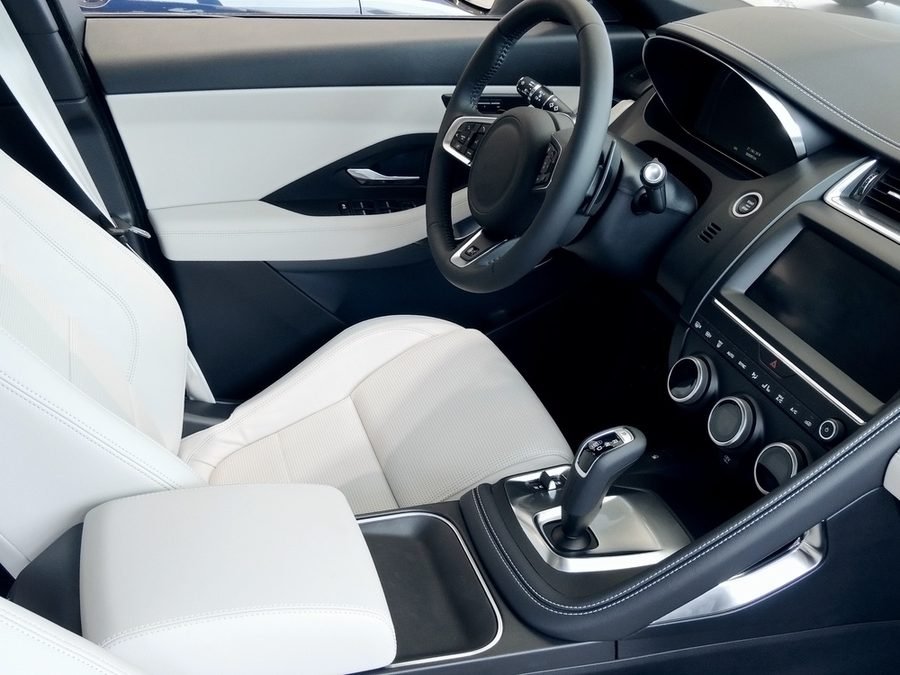
Car interiors work harder than most people expect. A seat cushion and side bolster go in and out hundreds of times a week; a dashboard bakes in direct sun; an armrest takes sweat, drinks and daily friction. The material covering them has to resist all of that while still looking and feeling premium.
One texture that has moved to the front of automotive interiors lately is the peach skin grain — a short-napped, matte, soft-touch surface that reads like nubuck or fine suede without the maintenance they demand. This guide explains what peach skin silicone leather is, where it works best in a car, and whether a soft feel comes with any trade-off in durability.
What an automotive interior material has to survive
Before comparing grains, it helps to set the bar. Trim in a passenger cabin faces five steady pressures, and the material has to hold up to all of them at the same time.
- Abrasion. Entry and exit rub on seat bolsters, armrests and the steering wheel week after week. On a microfiber backing, our silicone leather reaches up to 20,000 Martindale abrasion cycles, the same test method used to grade upholstery wear in automotive seating.
- UV and heat. Dashboards and exposed seat sides sit in direct sun for hours. The silicone coating holds its color and flexibility through 5+ years of outdoor service and stays usable from −40°C to 200°C, so summer cabin heat and cold winter starts do not crack or fade the surface.
- Stains and cleaning. Drinks, sweat, sunscreen, children and pets all land on trim. A silicone surface wipes clean with mild soap and water instead of absorbing the mark.
- Air quality. A car is a small closed space, so low odor and low VOC matter. Our formulation is PFAS-free, with no plasticizer migration that would leave a new-car chemical smell.
- Flame resistance. Interior trim has to meet flame requirements such as FMVSS 302 in the U.S., and can be supplied to EN 13501 B1–A1 class where the project calls for it.


If you are still weighing which material class to specify, our automotive silicone leather selection guide walks through abrasion class, UV dosage, backing construction and colorfastness. The difference between the two main wear tests is covered in the Martindale vs Wyzenbeek comparison, and what a PFAS-free coating actually means for buyers is in this PFAS-free upholstery explainer.
From glossy to matte: why soft-touch grains are trending
Older car trim leaned on smooth, slightly glossy finishes. Today the direction in premium interiors is the opposite: matte, fine-napped surfaces that feel warmer under the hand and do not announce every fingerprint and dust particle.
There are good practical reasons for the shift. Glossy grain reflects window light, shows fine scratches after a few months, and can feel cold and plastic to the touch. A soft matte surface gives better grip on an armrest or wheel, hides light wear and hairline dust, and reads as a more expensive material from a distance.
Automotive grains sit on a spectrum:
- Smooth top — flat, even, easy to wipe.
- Nappa — fine, supple full-grain look, soft but still smooth.
- Pebble — visible small grain pattern, durable and neutral.
- Nubuck — buffed outer grain with a velvety nap.
- Suede — fleshy side, deep nap and a strong directional feel.
- Peach skin — a very short, even nap between nappa and nubuck: matte, silky, with almost no nap-direction shading.
Under the ISO 15115 leather vocabulary, nubuck is defined as grain leather buffed to a velvety effect, while suede is produced from the flesh side of the hide. Peach skin takes that soft nap but keeps it shorter and flatter than either, which is what makes it easier to maintain in daily use. You can read the formal definitions in the ISO 15115 leather standard vocabulary.
What peach skin silicone leather actually is
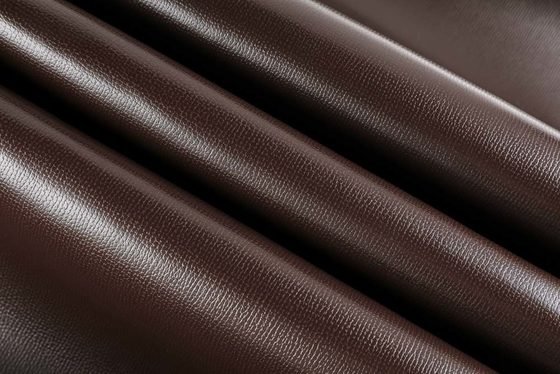
Peach skin silicone leather is a silicone-coated upholstery material whose surface is finely finished into a short, even nap that feels like the skin of a ripe peach: soft, velvety and matte rather than smooth or glossy.
On the surface it shows a low-sheen, steady color with no strong reflectance, so it photographs and sits well against lighter cabin palettes. Under the fingertips the micro-nap reads fine and even — cool at first contact, then warm, without the deep fuzzy pile of suede.
Peach skin silicone leather vs genuine nubuck and suede
Natural nubuck and suede are animal hide. They breathe and feel luxurious, but they absorb water and oil, stain easily, and need periodic conditioning to stay supple. A silicone peach skin surface does not absorb liquid, wipes clean in place, does not shed nap, and keeps its color and flexibility through a 10–20 year hydrolysis service life.
Peach skin silicone leather vs PU and PVC
PU and PVC synthetics rely on plasticizers that can migrate over time, soften in heat and release odor. The silicone coating on our material is typically 0.12–0.20 mm, with a dry, breathable feel and low VOC. If you want the full comparison across material classes, see what silicone leather is, the six questions buyers ask about silicone vs PU leather, and the honest silicone vs PU vs PVC comparison.
Where a peach skin grain works best in a car
Because the soft nap earns its keep where the body touches the trim most, peach skin is a natural fit for contact surfaces:
- Seat bolsters and cushion sides — the grip and soft feel show on the zones you brush against every time you sit down.
- Door armrests and center armrest — high-contact surfaces where a matte soft touch reads well and wear is less visible.
- Steering wheel wrap and headrests — the short nap supports grip without the deep pile of suede.
- Door panel inserts and console side trim — softer finishes for areas passengers run their hands over.
Large flat panels do not always need the softest grain. A common approach is to pair peach skin on contact zones with a smooth or pebble grain on broad panels, balancing feel, wear and cost. For lighter cabins that stay bright and clean over time, the light-colored car interiors silicone leather guide covers how the coating holds pale tones without yellowing.
Does a soft grain still hold up? The performance numbers
Soft does not have to mean fragile. The peach skin finish is applied to the same silicone backing line as our other automotive grains, so the performance class stays consistent:
- Up to 20,000 Martindale abrasion cycles on microfiber backing
- Scratch-resistant surface that resists keys, bag buckles and daily contact
- UV stable for 5+ years of outdoor service; hydrolysis resistant for 10–20 years
- Operating range −40°C to 200°C
- Stain resistant, wipe-clean, low odor, PFAS-free
- Flame class EN 13501 B1–A1; FMVSS 302 compatibility available on request
Day-to-day upkeep stays simple: vacuum the nap periodically and wipe spills with a damp cloth and mild soap. The full routine is in the silicone leather care and cleaning guide. You can see the material class in our automotive interior silicone leather line, or browse the full roll stock in silicone leather rolls.
How to choose and sample the right grain
Before locking a texture, match it to where it will live in the cabin, the interior palette and the expected wear class. Choose a microfiber backing for high-abrasion zones, and ask the supplier for actual test reports rather than marketing claims. The checklist in what to ask a silicone leather supplier before you order lists the reports worth requesting: Martindale abrasion, UV aging, hydrolysis, flammability and VOC.
Always judge the grain on a physical swatch under the same light as your cabin, because nap direction and sheen read differently on a screen. Request samples of the peach skin grain alongside the other textures you are considering, or contact Jemery with your target color, backing and application, and we will match the grade to your project.